|
|
||||||||||||
|
||||||||||||
|
Exhibiting hibiscus at hibiscus shows is a major hobby for many enthusiasts and when the number of blooms at many shows declined to 2-300 from nearly 1000, experts were puzzled. Exhibitors from southern Florida who normally had 100 blooms to show had few or none! Only recently has it been determined that the gall midge is the culprit. Undoubtedly the midge is causing problems in many people's yards!! For further information click on gall midge and this University of Florida site that refers to it as the "hibiscus bud midge."
Here are just a few tips on growing better hibiscus.
It's wise to check with local growers to see what works best
for them. Fertilize lightly and often -- hibiscus are heavy feeders. Use fertilizers that include the trace elements such as iron, copper, boron, etc. A dry fertilizer such as a 10-10-10 is all right, however most growers prefer low phosphate fertilizer such as a 7-2-7, feeling that it helps produce the most impressive quality and quantity of blooms. Those so-called "bloom specials" with the 10-40-10 type of formula are avoided by most professional growers -- phosphorous can build up in the soil over time and cause a general decline in the health of tropical hibiscus plants. Over-use of high nitrogen fertilizers may encourage leaf growth rather than flower production. Water soluble fertilizers are good both for spraying leaves (foliar feeding) and for fertilizing potted plants. (High phosphorous water soluble fertilizers can be used successfully when applied as a foliar feeding.) Experiment and see what works well for your local growing conditions. Slightly acid soil (a pH of 5.5 to 7.8) helps the plant absorb nutrients. Hard water and proximity to things like concrete can move the pH in the wrong direction -- toward an alkaline pH. Watering -- after pruning, with fewer leaves, your hibiscus need less water. Especially with potted plants, you need to be careful with watering. A big, leafy plant will "suck up" more water than a plant with fewer leaves. If you lift or drag your potted plant and it's heavy, the soil could be too wet. A plant in nearly dry soil is surprisingly light. Become accustomed to gauging soil wetness. Remember that both soil and pot need to drain well. Insects, such as aphids, thrips, scale,
whiteflies, mealy bugs, etc. should be checked for frequently. Water
plants thoroughly before using insecticides to lessen shock.
It's usually best to apply in the early morning or in the
evening when temperatures are below 80F degrees. When
applying, both the tops and undersides of the leaves should
be sprayed. Always read the labels for precautions and application instructions. For important information on insecticides, please visit this UF page. Pruning is used to shape future growth, invigorate
old plants, manage plant size and get rid of diseased and
dead wood. While the tropical hibiscus can be pruned any
time, probably the ideal is the earliest where the resulting
tender new growth will be safe from cold
damage*. For shaping purposes,
some growers will prune the longest third of the branches
and return in 4 to 6 weeks and prune the next longest third.
Only sharp, clean shears should be used. A clean cut should
be just above and angled down and away from an "eye" or
node. (A node is the junction of a leaf and the stem. There
is a small bud in this junction that is activated after
pruning.) Cutting above outward pointing "eyes" will
encourage growth in that direction. The new growth resulting
from pruning invigorates the plant and will provide a source
for many new blooms. (See "Watering" above.) Freeze-damaged plants should be cut back to living wood after all danger of freezing has passed or when regrowth resumes. You can check for living wood by scraping a bit of bark off with your thumbnail to see if there is any green underneath. Once you have found where live wood starts, prune just above the next node (eye) below that point. 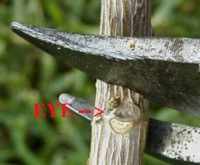 Another pruning idea... To keep getting blooms, think of your plant as having three sides. Prune one side at a time so that the other two sides can still produce blooms. Return in 4 to 6 weeks and prune the next side and so on. *Temperatures of 35 to 40F can sometimes cause injury to tender new growth. Temperatures that are just below freezing for several hours can cause severe damage. The longer these tropical plants have to endure these temperatures, the greater the risk. Trapping ground heat by covering the plants can prevent damage. Using low nitrogen fertilizers as fall approaches helps to make them a little more resistant to the cold. The Tropical Hibiscus Handbook (120 pages with many color photographs) is an excellent source of hibiscus and general gardening information. See the American Hibiscus Society's Publications page.
|
||||||||||||
|
|
||||||||||||
|
Back to: Hibiscus Home Page |